Those of you located near the border of Wheeler County might be interested in attending this networking event for local food buyers, sellers and producers:
Monday, April 5th
4-6pm
Wheeler County Family Services Conference Room
401 Fourth St.
Fossil, OR
This meeting will provide food buyers and sellers the chance to network, share information and discuss the upcoming growing season and direct-market opportunities.
Producers and processors of all agricultural products (vegetable, grain, fruit and livestock) are invited to attend, as well as buyers for grocery stores, restaurants, schools, caterers, hospitals, bakeries and other institutions. Please spread the work if you know of anyone in the region that would be interested!
There will also be an opportunity for discussions around other community interests and food projects—gardening, community and school gardens, farmers’ markets, nutrition, educational opportunities, etc.
Wednesday, March 31, 2010

Tuesday, March 30, 2010
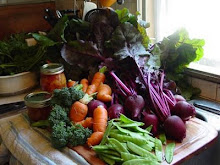
Call For Local Photos
 Photo by Judith O'keefe
Do you have pictures of our local farms/farmers, restaurants, grocery stores, farmers' markets, food bank volunteers, farm/garden workshops and classes, community gardens, etc. etc. etc. that will help tell the story of food in our community?
If in digital format they can be emailed to sydneyl@neighborimpact.org
Upcoming Food, Farm and Garden Events!
With Spring finally here, there are many exciting food, farm and gardening events coming up!
Community Garden Plot Sign Ups
Saturday, March 27th
Get a Community Garden Plot at the Willow Creek Community Garden, Madras
10AM
Willow Creek Garden
NE 10th and B st. Madras
Questions? Contact:
Beth Ann Beamer 460-4023 bbeamer@mvhd.org
Annie Ayres 390-0487 aayres@mvhd.org
Saturday, April 17th
Prineville Community Garden Plot Sign-Up
9am-11am
Prineville Presbyterian Church
1771 N. Madras Highway
We are in our 6th year and our orchard had fruit last year. We have 40 plots, good water, a secure deer fence, and have worked hard this spring to remove the gophers. The garden is organic and the soil has been well amended.
Classes, Workshops, and Events
TOMORROW (Wednesday, March 31st)
Vegetable Gardening in Central Oregon
Bend Public Library
FREE
5:30-7:30pm
Want to lower your grocery bills? Growing your own vegetables is fun and economical way to help during these tough financial times. Learn how to grow your own healthy produce from Cindy Jeffers in an informative session
Saturday, April 10th
Edible Landscapes
10am-Noon
CHS Garden Center, NW Depot Rd. Madras
Edible Landscapes will focus, on fruit trees. Scott Duggan will teach about soil preparation, selection of trees for Central Oregon and how to protect trees for disease and insects.Bring a coat to take a short outdoor tour and learn about pruning techniques as well. Bring a pair of pruners and give it a try.
To register, call 541-383-7270.
Saturday, April 10th
Composting and Organic Gardening Made Easy
Bend Public Library
FREE
1:00-2:30pm
Tuesday, April 13th
Community Food Systems Gathering
Ascension School & Conference Center
1104 Church St.
Cove, Oregon
10am-3pm
A gathering of groups and coalitions working to improve community food systems throughout Oregon
For more information contact Sharon Thornberry, Oregon Food Bank sthornberry@oregonfoodbank.org
Saturday, April 14-17th
The Small Farmer's Journal Horsedrawn Auction and Swap Meet
Jefferson County Fairgrounds, Madras
Free Admission; Charge for Fairgrounds Parking
More info and schedule here.
Saturday, April 24th
OSU Master Gardener Spring Gardening Fair and Garden Market
8am-4:30pm
Redmond Fairgrounds
$10 per class (pre-registration); $15 per class on event day
Special General Session: Gail Langellotto-Rhodaback speaks on Genetically Modified Foods
Classes Offered On: Vegetable Gardening, Food Preservation, Raising Chickens, Hardy Perennials, Using Conifers in C.O., Growing Apples, Hobby Greenhouse
More info here.
COCC Community Ed Home and Garden Courses
More info here.
Saturday, June 5th
Local Food Network Website Launch
Environmental Center, Bend
Noon-5pm
For more info email sarahlee.lawrence@gmail.com
Call For Volunteers!
Fields Farm intern, Jeremy Fox has set up a series of farm tours throughout the month of May for local elementary and middle schoolers.
The goals of these trips is to expose kids to who farmers are and where food comes from, as well as have a fun time meeting goats and chickens and greenhouses.
If you're interested in volunteering to give guided tours of the farm for a morning or two contact Jeremy at: zorndylan@hotmail.com
No experience necessary, just an interest is teaching kids about food!
WIC (Women Infants and Children) Fruit & Vegetable Voucher Trainings for Producers
Thursday, April 29th
MADRAS
3:30-5pm
Jefferson Co. Health Department
Friday, April 30th
PRINEVILLE
Noon-1:15
OSU Extension Service Office
502 SE Lynn Blvd , Prineville , OR
Saturday, May 1st
BEND
9am-11am
St. Charles Hospital
Training Room "E"
Training room E is located between the volunteer desk and the former health and care store near the front entrance.
For more information contact Kelly Streit at eatsmart@onnutritionstreit.com
Community Garden Plot Sign Ups
Saturday, March 27th
Get a Community Garden Plot at the Willow Creek Community Garden, Madras
10AM
Willow Creek Garden
NE 10th and B st. Madras
Questions? Contact:
Beth Ann Beamer 460-4023 bbeamer@mvhd.org
Annie Ayres 390-0487 aayres@mvhd.org
Saturday, April 17th
Prineville Community Garden Plot Sign-Up
9am-11am
Prineville Presbyterian Church
1771 N. Madras Highway
Please come and enjoy garden preparation day and
reserve your plot. Small plots are $30 and large plots
$40 for the season. Your fee covers water and soil amendments.
Our garden is organic and some seeds and starts will also be
available for free.
We are in our 6th year and our orchard had fruit last year. We have 40 plots, good water, a secure deer fence, and have worked hard this spring to remove the gophers. The garden is organic and the soil has been well amended.
No plots may be reserved prior to April 17th.
If you have questions, please call Kim Kambak (541) 771 1923.
Classes, Workshops, and Events
TOMORROW (Wednesday, March 31st)
Vegetable Gardening in Central Oregon
Bend Public Library
FREE
5:30-7:30pm
Want to lower your grocery bills? Growing your own vegetables is fun and economical way to help during these tough financial times. Learn how to grow your own healthy produce from Cindy Jeffers in an informative session
Saturday, April 10th
Edible Landscapes
10am-Noon
CHS Garden Center, NW Depot Rd. Madras
Edible Landscapes will focus, on fruit trees. Scott Duggan will teach about soil preparation, selection of trees for Central Oregon and how to protect trees for disease and insects.Bring a coat to take a short outdoor tour and learn about pruning techniques as well. Bring a pair of pruners and give it a try.
To register, call 541-383-7270.
Saturday, April 10th
Composting and Organic Gardening Made Easy
Bend Public Library
FREE
1:00-2:30pm
Tuesday, April 13th
Community Food Systems Gathering
Ascension School & Conference Center
1104 Church St.
Cove, Oregon
10am-3pm
A gathering of groups and coalitions working to improve community food systems throughout Oregon
For more information contact Sharon Thornberry, Oregon Food Bank sthornberry@oregonfoodbank.org
Saturday, April 14-17th
The Small Farmer's Journal Horsedrawn Auction and Swap Meet
Jefferson County Fairgrounds, Madras
Free Admission; Charge for Fairgrounds Parking
More info and schedule here.
Saturday, April 24th
OSU Master Gardener Spring Gardening Fair and Garden Market
8am-4:30pm
Redmond Fairgrounds
$10 per class (pre-registration); $15 per class on event day
Special General Session: Gail Langellotto-Rhodaback speaks on Genetically Modified Foods
Classes Offered On: Vegetable Gardening, Food Preservation, Raising Chickens, Hardy Perennials, Using Conifers in C.O., Growing Apples, Hobby Greenhouse
More info here.
COCC Community Ed Home and Garden Courses
More info here.
Saturday, June 5th
Local Food Network Website Launch
Environmental Center, Bend
Noon-5pm
For more info email sarahlee.lawrence@gmail.com
Call For Volunteers!
Fields Farm intern, Jeremy Fox has set up a series of farm tours throughout the month of May for local elementary and middle schoolers.
The goals of these trips is to expose kids to who farmers are and where food comes from, as well as have a fun time meeting goats and chickens and greenhouses.
If you're interested in volunteering to give guided tours of the farm for a morning or two contact Jeremy at: zorndylan@hotmail.com
No experience necessary, just an interest is teaching kids about food!
WIC (Women Infants and Children) Fruit & Vegetable Voucher Trainings for Producers
Starting 2010, farmers who sell their fruits and vegetables directly to consumers at farm stands or at farmers’ markets may sign up to participate in the existing Farm Direct Nutrition Program (FDNP) and/or a NEW program called the WIC Fruit & Veggie Voucher Program.
All farmers who want to accept the new WIC Fruit & Veggie Vouchers need to attend a 75-minute “face-to-face” Training Session as part of the authorization process, since the requirements for this program are different from the FDNP Program.
Thursday, April 29th
MADRAS
3:30-5pm
Jefferson Co. Health Department
Friday, April 30th
PRINEVILLE
Noon-1:15
OSU Extension Service Office
Saturday, May 1st
BEND
9am-11am
St. Charles Hospital
Training Room "E"
Training room E is located between the volunteer desk and the former health and care store near the front entrance.
For more information contact Kelly Streit at eatsmart@onnutritionstreit.com
Wednesday, February 24, 2010
Bend Community Radio Panel on Hunger in Central Oregon
Right Here, Right Now
"Right Here, Right Now!"
Tune in “Right Here, Right Now!” at 5 p.m., Friday, February 19, at 106.7 FM and streaming at www.kpov.org for a local panel discussion on hunger and food security in Deschutes County.
Community panelists in the hour long discussion on hunger are:
Taffy Gleason, Executive Director of Bend's Community Center
Lyle Hicks, owner of Jake's Diner
Sydney Leonard, Community Food Systems Coordinator with Wy'East Resource Convervation and Development
Glenda Hyde, instructor in the Family and Community Health, Oregon State University Extension Service
Kiecha Kisler, a job trainee in the COIC Jobs Plus Program.
“Right Here, Right Now” airs on the third Friday of each month and features candid conversation on critical local issues by community members, elected officials, and activists in an hour-long roundtable format. The panel discussion is moderated by KPOV volunteer Chris Clouart and produced by Michael Funke with technical assistance from Joe Katroscik and Tristan Reisfar.
CLICK "Listen to the most recent Right Here Right Now!" at THIS SITE TO LISTEN TO THE SHOW: http://www.kpov.org/index.php?option=com_shows&task=view&id=128
Tuesday, February 23, 2010
Opportunities for Youth Engagement in the Food Assessment Process
Help Tell the Story of Food
The Central Oregon Community Food Assessment is documenting the strengths
We need your help to tell the story of the local people who grow
There are opportunities to interview
· Farmers and Ranchers
· Emergency Food Providers (soup kitchens and food banks)
· Independent Grocery and Restaurant Owners
· Butchers and Processors
· Community and Home Gardeners
If you are interested in getting involved please contact
Check out these video clips for examples of other youth engagement in food assessments around the country:
Thursday, February 4, 2010
PRODUCER SURVEY


Last week we sent out the Producer Survey to local farmers and ranchers through the OSU Extension mailing list. This critical piece of the food assessment process will help us to better understand the issues impacting small farm viability in our region and give us leverage for future funding and grant opportunities to bridge identified gaps.
Whether you received the survey in the mail or not, it can be taken online here. If you have trouble with the link, just copy and paste this website into your address bar: http://www.surveymonkey.com/s/NY8Y8MB
If you are a producer please do take the time to fill out this important survey which will lead to direct action around building a local food system. By identifying key issues shared amongst our local producers we can pool resources, expand existing programs and seek funding and grants for new projects.
Producers, and non-producers alike, please sent this link to any farmers, ranchers or value-added producers you know if Crook, Deschutes, or Jefferson County.
Gigi Meyer's--Windflower Farm--Letter to Deschutes County Commissioners

To the
My name is Gigi Meyer and I own Windflower Farm, a 10-acre, mixed-use farm in Alfalfa. I understand there is some discussion lately about re-defining EFU zones to allow for destination resort development. I believe this would be a grave mistake and disservice to our community on so many levels, not the least of which, is that we are currently saturated with resorts that have large vacancy rates. Beyond the folly of another short-sighted land grab for the benefit of a few property owners; the value of farmland, and potential food-growing opportunities for our population, cannot be over-estimated. Oregon has a history of strong protections for our open space – it is why we are such a coveted tourist destination in the first place. To diminish the beauty and environmental health of our surroundings is to throw the baby out with the bathwater.
It has come to my attention that some property owners are claiming that their irrigated acreage is too “marginal” for farming. Central Oregon's generous water supply makes it an even more ideal venue for agriculture than other areas that may start off with more fertile soil. As you may know, the Klamath Basin and many prime agricultural areas in California and around the world are suffering water conflicts and shortages that will only increase in the future. Soil can be amended to grow food. My farm started off as a patch of weeds and rocks. I added compost and organic fertilizer and it bloomed. So the soil fertility issue is a canard. But without water, plants don't grow. So as farmland decreases around the world, those areas with ample irrigation will be the lucky ones and will be able to sustain their populations with local farms. Farmland (ie. food) is necessary to human survival. We should be looking for ways to preserve it and improve it, not sell it to the highest bidder for more luxury resorts or housing developments.
As a farmer, I would like to see some small changes in the EFU definitions that would allow me to farm more successfully. To my mind, this should be the focus of any changes – to preserve, enhance, and encourage farming.
Some background:
I grow vegetables, herbs, fruit and flowers. I have a flock of 30 laying hens and sell both produce and eggs through a CSA (Community Supported Agriculture) membership program, feeding roughly 40 families in our community throughout the growing season. Additionally, I team up with a local goat dairy to offer my members an assortment of farmstead cheeses. I sell my extra produce to a local natural food store. Two broodmares and their progeny comprise my small sport horse breeding operation and two young dairy goats currently provide organic weed control and will soon be bred to milk.
Following a bio-dynamic model, I compost manure from my animals along with garden debris to provide fertilizer for my pastures, orchards, and produce plots. I use greenhouses, row cover, rock walls and windbreaks to extend the growing season and practice crop rotation, the planting of cover crops and beneficial insect havens to enhance our farm ecology. Although not certified, I farm according to organic practices. Many people did not believe that gourmet produce could grow in our area. Historically, a farm in Central Oregon meant a ranch of hundreds or thousands of acres of beef cattle, sheep, or hay.
My vision of my farm from the start was that it would be a model for sustainable, farm-to-table agriculture in Central Oregon. My farm, along with 4 other CSA farms in the area are living proof that our region can grow a tremendous variety of the highest quality produce for human consumption. I’ve found tremendous enthusiasm in our community for my farming adventure and each year have a waiting list for my CSA. Oregon State University Extension as well as the culinary school at Central Oregon Community College regularly schedule class visits to my farm and the excitement of the students is truly inspiring. We receive applicants for interns from around the world who are eager to come spend time working on and learning about the farm in the hope of one day having a productive farm of their own.
Societal trends indicate increased human desire for healthy food and a healthy planet. Small, diverse food farms that serve their local communities further both of these goals. Yet there remain substantial hurdles to overcome to insure that environmentally responsible farming can proliferate and be financially sustainable for the farmer. Below I’ve listed both the positive values of sustainable farming as I see them as well as the hurdles I’ve discovered in making local food farming in our area economically viable.
The value of small scale, sustainable food production
- To Provide healthy food to the local community.
- To Provide food security. It has been estimated that, in an emergency, due to our dependence on trucked-in food, our community has 4 days worth of sustenance in the grocery stores. More local food farms means more food security.
- Incurs Small Carbon Footprint –we depend on manual labor with minimal use of tractors and fossil fuels, have minimal transport from farm to consumer, we recycle packaging and cycle compost back to the soil, minimizing the need for chemical fertilizers.
- Keeps rural land in agricultural production
- Keeps rural land scenic – tourist attraction A popular road-biking route from Bend comes by my farm regularly.
- Contributes to the local economy and also provides economic diversity in a system that has been lop-sided regionally towards large-scale hay and livestock ranching
- Protects the land through bio-diversity and sustainable/organic practices – improving the soil, protecting air and water, and providing a haven for bees and other beneficial insects which is a benefit to all surrounding farms, small and large.
- Engages in fair labor practices. Conventional, large-scale agriculture has a history of sub-par pay for workers and a high risk of involuntary exposure to toxic chemicals. Truly sustainable farms provide healthy jobs at a living wage.
The challenges – Making Ends Meet; How the County can Help
1. Sustainable farming is labor intensive. Allow for separate (to-scale) farm-help dwelling on small acreage. My labor costs are my primary operating expense. This is true, not just for me but for similar farms in the area. There are programs in place that match eager young people willing to work and learn the trade with small farm CSAs. Yet under the current zoning restrictions, small farms in Deschutes County with EFU (Exclusive Farm Use) status are prohibited from providing board to these willing workers in a separate shelter on the farm. The requirement is that a farm be 40 acres or more to qualify for a dwelling exemption. The restriction should be based on commercial farm activity and not on acreage. The law is out-dated and doesn’t reflect the changing tide in agriculture toward small, sustainable food production.
In keeping with the purpose of EFU zoning, which is designed to protect and preserve agricultural land and in order to reflect the changing nature of agriculture, I would propose allowing limited accessory housing for farm labor to help small-scale, sustainable farms to be productive and profitable.
2. Current food prices don’t reflect the true costs of sustainable food production and farmers must find alternate income. Allow for low-key agri-tourism. Small farmers must be creative in searching for alternate sources of income. A 2000 study out of Cornell University reported that farmers who incorporated agri-tourism into their farm activity could be 40% more profitable than those that did not.
A local biking club is interested in making my farm a lunch stop. For a fee, I could provide tables in a pastoral setting for 5 to 6 bicyclists and offer tea and salad. Several chefs in town have approached me expressing interest in having Farm to Table
dinners here on the farm. These are increasingly popular events in farms near
Additionally, I have a loft space above our horse barn that could be easily converted to comply with residential codes. One couple or small family at a time could rent the space for a few days to learn about sustainable agriculture. This is a growing trend in Europe and around the U.S. and has been the difference, in many cases, in allowing farmers to stay on their farms and survive financially. This broader view of agricultural purpose also benefits the local economy and the larger tourism industry in our area - by providing more options for visitors and by showcasing the diverse beauty of our landscape. I would like to emphasize that I am not asking to take my viable farming land out of production to build a dwelling. In spite of the added excavation expense, I purposely chose to situate my barn on the narrow strip of lava that crosses our property and not on irrigable land, in order to maximize the productivity of my farm. The loft space that could house a couple of tourists, is contained within this existing structure.
There is growing public attention being paid to human and planetary health that is fueling the burgeoning of sustainable agriculture. I’m amazed at how quickly local food programs have proliferated across the country and have begun to take root here in Deschutes County. I would love to tell the 40 potential clients on my CSA waiting list, whom I’ll have to turn away, that there are new farms coming to them and that local food will soon be available to all who want it. Your future efforts could make the difference in providing small, sustainable farms like mine the support they so desperately need. Thank you very much for your time and attention.
Sincerely,
Gigi Meyer
Subscribe to:
Posts (Atom)